


Information
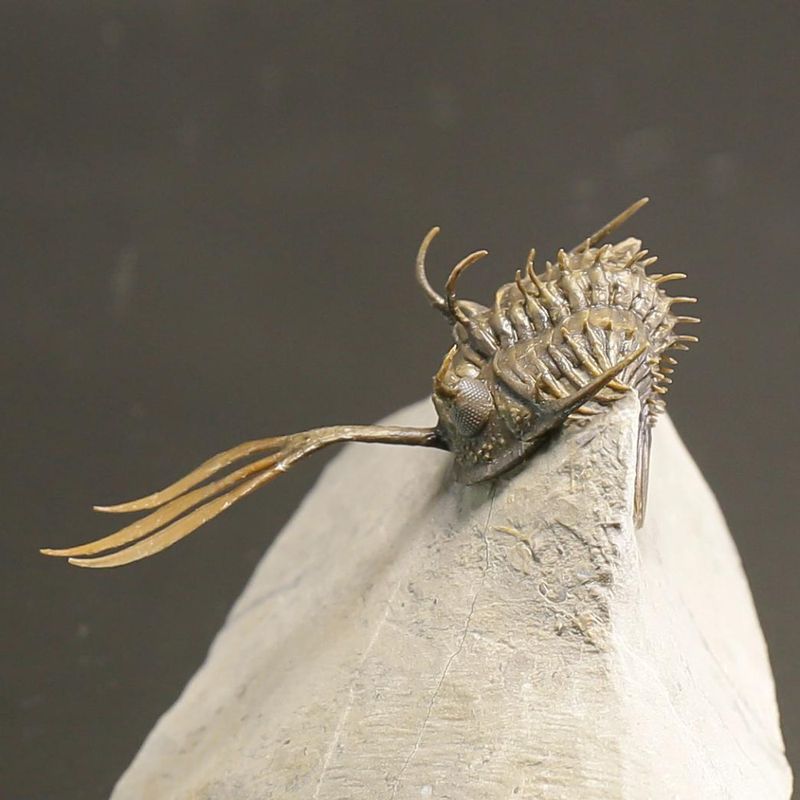
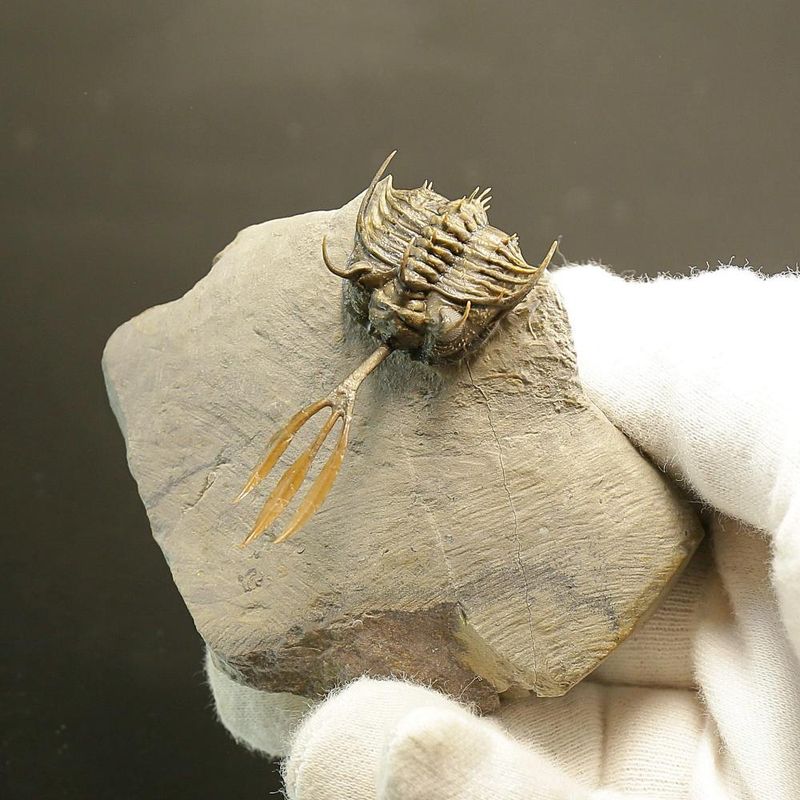
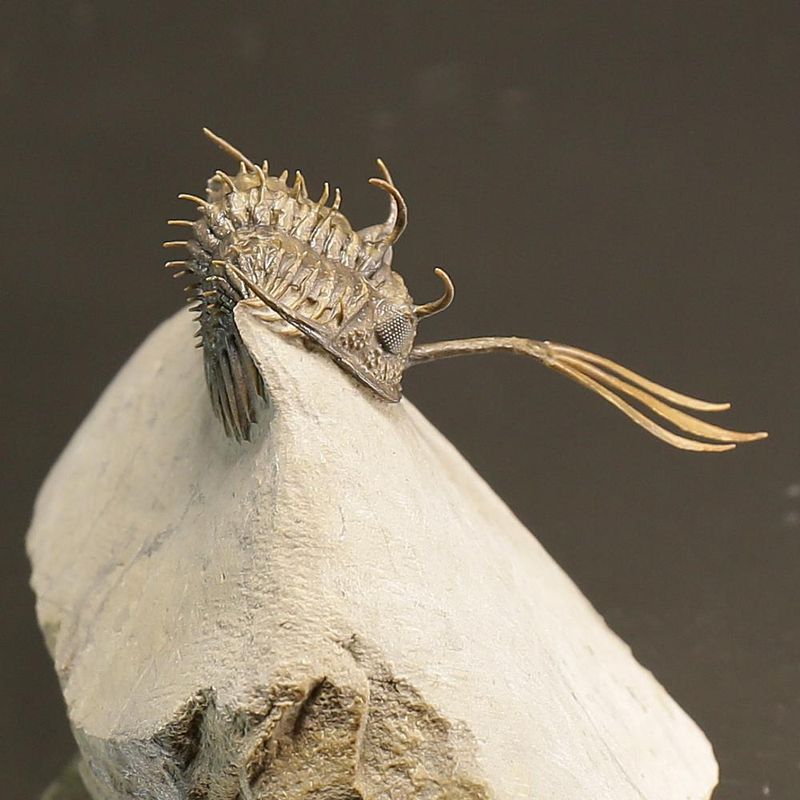
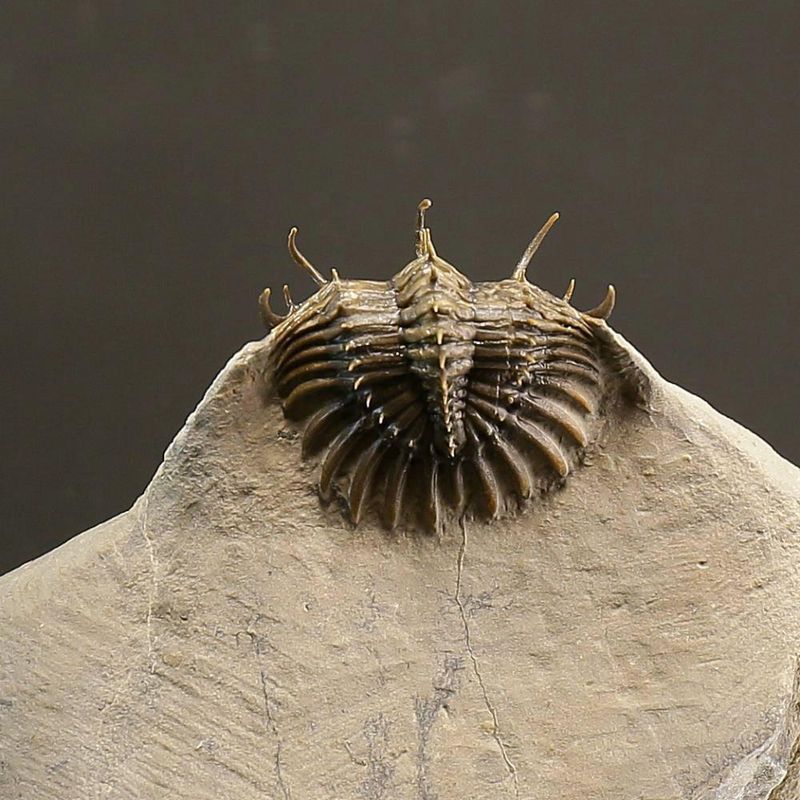
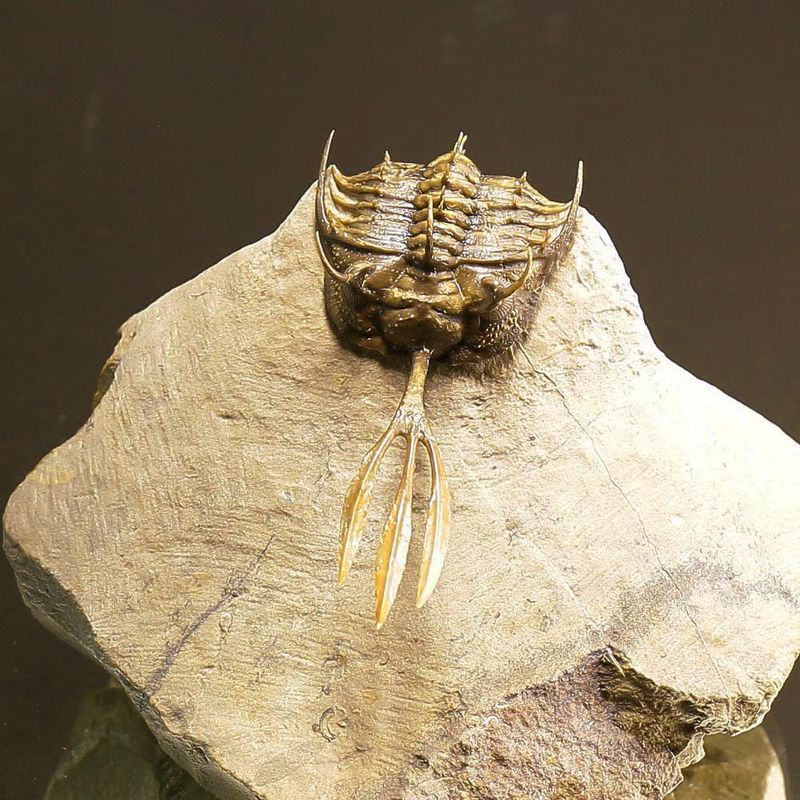
An outstanding specimen of Walliserops trifurcatus, one of the most extraordinary and recognizable trilobites ever discovered. Measuring approximately 8 cm, this fossil has been expertly prepared and is preserved in a completely natural state, with no restoration, revealing exceptional anatomical detail.
The specimen displays the species' unmistakable three-pronged trident-shaped frontal spine, beautifully preserved compound eye lenses, and a rich chocolate-brown exoskeleton that contrasts elegantly with the natural matrix. The meticulous preparation highlights every detail while maintaining the integrity of the fossil, resulting in a spectacular museum-quality display.
The function of the remarkable trident has fascinated paleontologists for decades. Several scientific hypotheses have been proposed, including its possible use in intraspecific competition, display, sensory functions, or even capturing or disturbing prey during feeding. While its exact purpose remains uncertain, the trident represents one of the most remarkable evolutionary adaptations known among trilobites.
Complete Walliserops specimens with intact tridents, well-preserved eye lenses, and professional preparation are increasingly rare and highly sought after by serious collectors, museums, and educational institutions.
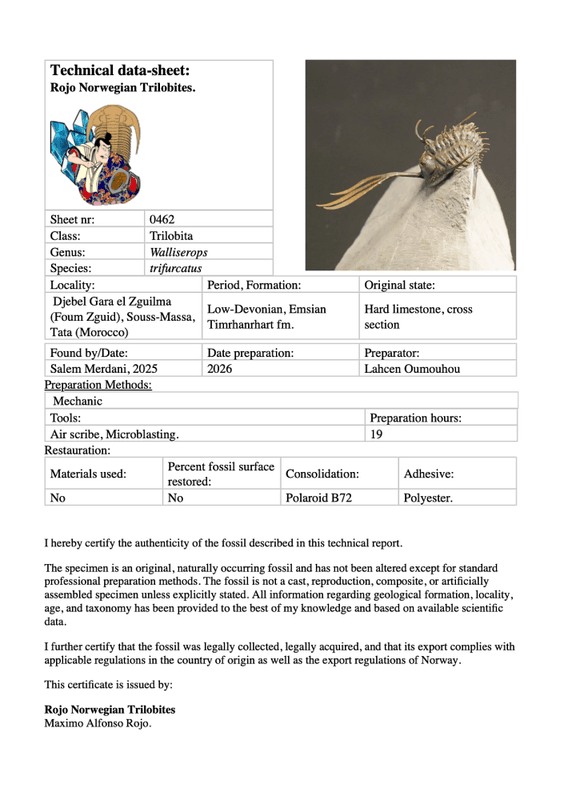
- Species: Walliserops trifurcatus
- Age: Lower Devonian, Emsian (407.6–393.3 million years)
- Locality: Djebel Gara el Zguilma (Foum Zguid), Souss-Massa, Tata, Morocco
- Size: Approx. 8 cm axially
An exceptional example of one of the most bizarre and fascinating arthropods ever to inhabit the ancient Devonian seas.
